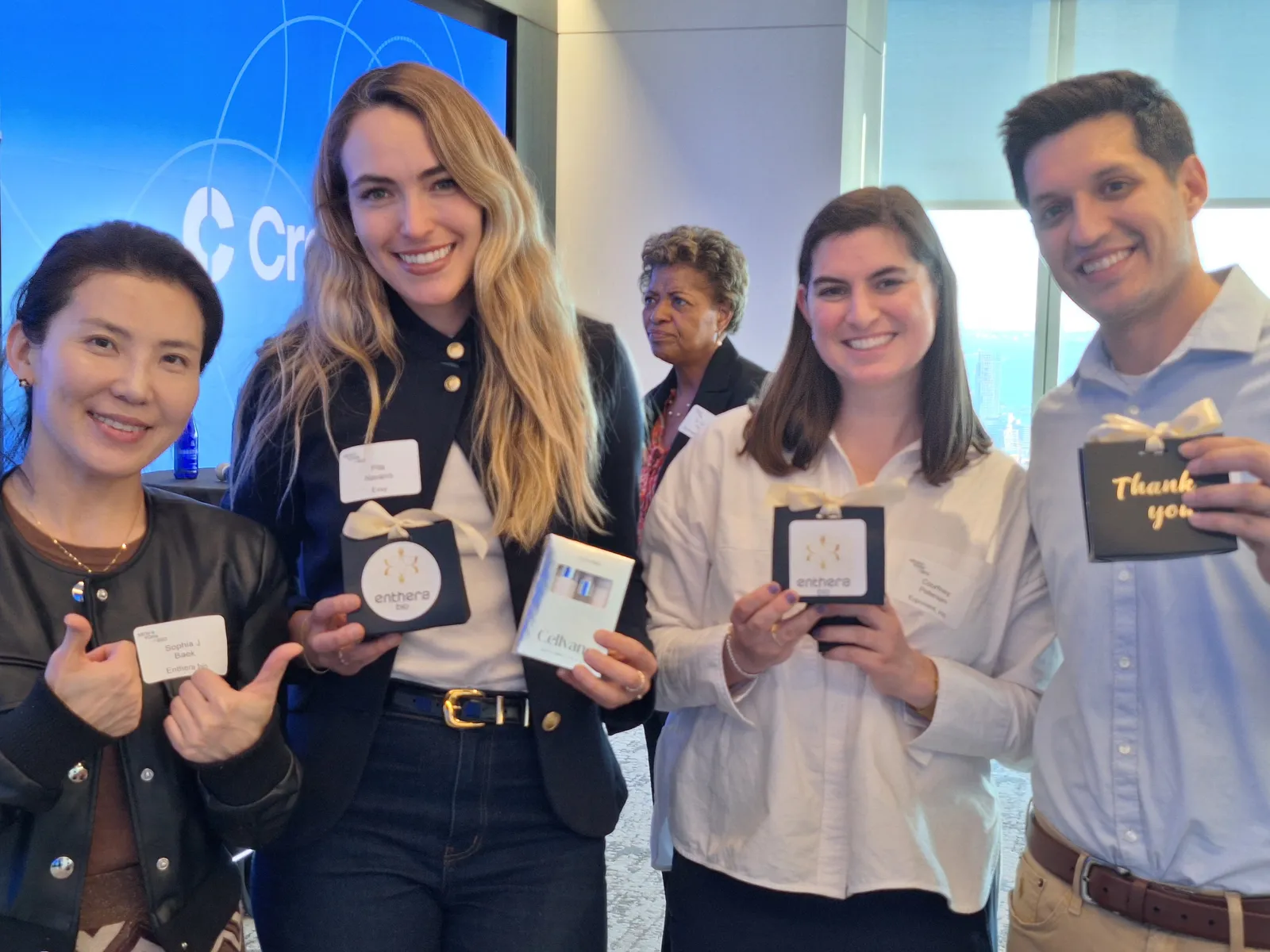
Biotech Skincare vs. Traditional Skincare: What Actually Works Better for Anti-Aging
By Entherabio.com12 min read
Biotech skincare generally outperforms traditional skincare for anti-aging because it uses precision-engineered ingredients, such as bio-fermented peptides, recombinant growth factors, and lab-synthesized retinoids, that target skin aging at the cellular level. Traditional formulas rely on botanical extracts and empirical formulation. For measurable results, especially after age 30, biotech actives have stronger clinical backing.
What Is the Core Difference Between Biotech and Traditional Skincare?
The fundamental divide between biotech and traditional skincare is not just about ingredients. It is about intent at the molecular level. Traditional skincare relies on familiar topical actives and emollients, botanical extracts, mineral compounds, and empirically tested formulations built over decades of use. These products are typically marketed as reducing the appearance of aging signs such as wrinkles, dryness, and uneven texture. They work by smoothing or plumping the skin surface for a more immediate visible effect. Retinol from vitamin A, ascorbic acid from citrus, glycolic acid from sugarcane. The actives are real. The results are real. But their molecular precision is limited by what nature provides. Biotech skincare operates differently. It aims to work at a deeper biological level, often using lab-developed or fermentation-derived ingredients with skin longevity claims that emphasize changing how skin behaves over time (greenlivingtribe.com). Biotech products are marketed as rebuilding or supporting skin processes rather than simply masking their decline. The distinction matters because collagen production begins slowing at age 25, declining 1-2% yearly (innerbalance.com). Surface correction becomes less adequate the deeper the deficit runs.
How Does Biotechnology Actually Produce Skincare Ingredients?
Biotech ingredient production relies on three primary platforms. Fermentation technology uses microorganisms like yeast or bacteria to produce highly bioavailable actives, including hyaluronic acid and beta-glucan, with a purity and consistency no plant harvest can replicate. Recombinant DNA technology allows scientists to produce human-identical proteins, such as collagen peptides and EGF, without animal sourcing, eliminating both ethical concerns and batch variability. Synthetic biology platforms go further, designing novel molecules optimized for specific skin receptor binding that simply do not exist in nature. This process removes the core weakness of botanical formulation: inconsistent potency. A rose hip extract varies by harvest region, season, and processing method. A fermentation-derived vitamin C derivative does not. The global bio-fermented hyaluronic acid market alone is projected to grow from USD 63.7 million in 2025 to USD 189.5 million by 2035 at a CAGR of 11.5% (futuremarketinsights.com), signaling strong industry confidence in fermentation-derived actives.
What Defines a Traditional Skincare Formulation?
Traditional skincare formulations center on actives with a 50-100 year safety record: retinol, glycolic acid, vitamin C as L-ascorbic acid, niacinamide from plant sources, and hyaluronic acid derived from animal or botanical processing. Botanical-based ingredients still hold a 66% market share in the global skincare ingredients space (factmr.com), reflecting both consumer familiarity and entrenched supply chains. This is not a weakness in isolation. The long clinical track record of traditional actives provides a safety profile and patient outcome data that newer biotech ingredients are still building. The challenge is molecular precision. Botanical extracts contain hundreds of compounds at variable concentrations. Only a fraction of those compounds have demonstrated anti-aging activity in controlled settings. When a product claims rose extract is its active, you are buying a complex matrix of unknowns alongside a small percentage of efficacious molecules.
How Do Biotech and Traditional Actives Compare on Anti-Aging Efficacy?
This is where the clinical data diverges most sharply, and where the biotech advantage becomes concrete. Biotech skincare uses bioengineered or biologically inspired ingredients to influence skin function directly, including supporting repair, hydration, collagen signaling, and barrier health, while traditional cosmetic skincare mainly improves appearance rather than directly targeting skin biology (greenlivingtribe.com). Peptides like Argireline, engineered via biotech platforms, can reduce expression lines by up to 30% in clinical trials (ammuriskincare.com). Matrixyl 3000 has peer-reviewed studies confirming upregulation of collagen I, III, and IV synthesis in fibroblasts, a mechanism botanical extracts cannot replicate through topical application. Women lose up to 30% of their skin collagen in the first five years after menopause (innerbalance.com). At that rate of structural loss, broad antioxidant coverage from botanical formulas is simply not enough.
Which Anti-Aging Ingredients Have the Strongest Clinical Evidence?
Both categories have legitimate evidence. The difference is in the mechanism and the precision of the outcome. Traditional retinol carries decades of randomized controlled trial data confirming wrinkle reduction, skin texture improvement, and accelerated cell turnover. It remains a gold-standard active. Vitamin C as L-ascorbic acid has a proven brightening and collagen co-factor role. The limitation is stability: L-ascorbic acid degrades rapidly with light and air exposure, reducing the delivered dose at the skin surface. Biotech-stabilized vitamin C derivatives solve this problem. Bio-fermented hyaluronic acid fragments penetrate deeper than traditional high-molecular-weight HA, reaching the dermis rather than sitting on the surface. A clinical study comparing 0.5% bakuchiol and 0.5% retinol found similar improvements in skin, but retinol users experienced more irritation (doctorrogers.com). Bakuchiol, a fermentation-derived retinol alternative, represents exactly the kind of biotech innovation that closes the gap between efficacy and tolerability.
Why Do Biotech Actives Often Outperform Botanical Extracts for Aging Skin?
Molecular weight engineering is the decisive factor. Biotech actives are designed with molecular sizes optimized for dermal delivery, allowing them to cross the skin barrier at rates traditional botanical extracts cannot achieve. This is not a marketing claim. It is structural chemistry. A peptide like Matrixyl 3000 is engineered to bind fibroblast receptors and signal collagen synthesis. No botanical extract operates with that specificity. The line between biotech and traditional is not always strict, and many conventional products contain evidence-based actives like retinol, niacinamide, and vitamin C that have legitimate anti-aging science behind them. At Entherabio.com, we recognize that the most effective anti-aging strategies often combine the best of both approaches, selecting actives based on clinical evidence rather than ingredient origin alone. The meaningful question is not "natural versus synthetic" but "does this ingredient reach its target at a therapeutic dose, and is there clinical evidence it does what the label claims?" At Entherabio.com, we evaluate every active on that basis, not on whether it came from a lab or a plant.
Safety, Sensitivity, and Ingredient Transparency: A Side-by-Side Comparison
Safety profiles for biotech actives are frequently misunderstood. The assumption that "natural" means safer is not supported by ingredient toxicology data. Complex botanical extracts carry pollen, terpene, and pesticide contamination risks, and common botanical allergens like linalool, limonene, and eugenol are documented contact sensitizers. Biotech actives produced in controlled fermentation environments eliminate microbial contaminants and remove the allergenic co-compounds present in whole-plant matrices. Recombinant proteins and synthesized peptides are structurally identical to human skin proteins, which reduces immune-response risk compared to foreign plant-derived compounds. Traditional actives like retinol and AHAs have well-documented irritation profiles. They work, but they demand careful dose management. Biotech alternatives like hydroxypinacolone retinoate (a retinoid ester) and PHAs deliver comparable renewal activity with a gentler tolerability profile. Ingredient transparency is also higher in biotech formulation: the identity of a synthesized active is exact and verifiable, unlike proprietary botanical blends that may obscure active concentrations behind trade names. For a woman with reactive skin who has abandoned multiple anti-aging routines due to flare-ups, this transparency is not a minor feature. In our experience evaluating skincare ingredients for sensitive skin types, ingredient transparency and verifiable active concentrations are essential factors that separate products that deliver results from those that create frustration. It is the difference between a routine that works and one that sits unused.
Biotech vs. Traditional Skincare: Full Comparison Table
| Factor | Biotech Skincare | Traditional Skincare |
|---|---|---|
| Ingredient Origin | Lab-engineered, fermentation-derived, or recombinant biological processes | Botanical extracts, minerals, naturally occurring vitamins |
| Molecular Precision | High: single active molecule at defined concentration | Variable: complex plant matrices with inconsistent potency |
| Anti-Aging Mechanism | Targets specific receptors and biological pathways (collagen signaling, cell renewal) | Broad antioxidant, hydration, and surface-level exfoliation |
| Clinical Evidence | Growing body of RCTs and in-vitro studies on specific engineered actives | Decades of clinical data on core actives (retinol, vitamin C, AHAs) |
| Sensitivity Risk | Lower: removes botanical allergens and irritants | Higher for strong actives (retinol, AHAs); lower for mild botanical formulas |
| Ingredient Stability | High: engineered for shelf stability (e.g., stabilized vitamin C derivatives) | Variable: L-ascorbic acid and retinol degrade rapidly with light and air |
| Skin Penetration | Optimized molecular weight for dermal delivery | Limited by natural molecular size of most botanical compounds |
| Formulation Transparency | Exact ingredient identity verifiable | Proprietary botanical blends may obscure active concentrations |
| Innovation Speed | Rapid: new actives from synthetic biology and biotech R&D | Slower: constrained by available natural ingredient supply |
| Price Point | Often premium due to R&D and precision manufacturing | Wide range from drugstore to luxury pricing |
How to Choose the Right Anti-Aging Approach for Your Skin Goals
The most effective routine is not ideologically biotech or ideologically traditional. It is evidence-led. Prioritize proven actives regardless of origin, but understand where each category has structural advantages. For fine lines, loss of skin elasticity, and collagen depletion, which accelerate from the mid-30s onward, biotech peptides, engineered retinoids, and recombinant growth factors deliver the strongest measurable outcomes. For hyperpigmentation and dullness, biotech-stabilized vitamin C derivatives and fermented niacinamide outperform unstable traditional formulas that degrade before they reach the skin. For skin barrier repair and deep hydration, biotech-produced ceramide fractions and bio-identical hyaluronic acid provide structural support at the dermis level that surface-focused traditional moisturizers cannot replicate. The growing preference for simplicity matters here: 64% of skincare users say they prefer fewer, more effective products (beautyindependent.com). A routine built around 2-3 clinically validated biotech actives will outperform a 10-step routine stacked with botanical claims and no clinical backing. Simplicity and science, not complexity and marketing, drive real results.
What Should a Science-Backed Anti-Aging Routine Actually Include?
Consider a 38-year-old woman who has used retinol for two years with moderate results but persistent dryness and peeling. Swapping to hydroxypinacolone retinoate in the evening, adding a Matrixyl 3000 peptide serum, and replacing her traditional HA moisturizer with a bio-fermented low-molecular-weight HA layer is a direct upgrade in both efficacy and tolerability. No step increase required. The morning routine stays simple: a biotech-stabilized antioxidant serum (ascorbyl glucoside or ethylated vitamin C) followed by a broad-spectrum SPF 30+ mineral or hybrid sunscreen. Weekly, a low-dose AHA exfoliant, either glycolic or lactic acid, accelerates surface renewal and improves active penetration. Avoid layering vitamin C and AHAs in the same application step; the pH competition reduces the efficacy of both. This is not theory. It is practical clinical skincare applied to a real skin concern.
How Do You Evaluate Whether a Skincare Brand's Science Claims Are Credible?
Look for peer-reviewed ingredient studies, not brand-funded in-house trials with no control group. Verified active concentrations should be disclosed or available on request, not hidden behind proprietary blend labels. Clinical outcome language, such as percent wrinkle depth reduction measured by profilometry or skin elasticity improvement measured by cutometer, is more credible than sensory claim language like "looks younger" or "feels smoother." Brands with dermatologist or research-institution partnerships provide stronger third-party validation. If a brand cannot tell you the concentration of its peptide complex, the molecular weight of its hyaluronic acid, or the source of its growth factors, treat those gaps as red flags.
The Future of Anti-Aging Skincare: Where Biotechnology Is Headed
The global skincare market reached $150.14 billion in 2025 and is projected to hit $206.9 billion by 2030 at a CAGR of 6.7% (researchandmarkets.com). Within that, the biotechnology-driven skincare segment was valued at $5.8 billion in 2025 and is projected to reach $8.6 billion by 2032 (beautymatter.com). The active ingredients segment in bio-based cosmetics is growing at a CAGR of 14.2% between 2026 and 2035 (custommarketinsights.com), the fastest-growing segment in the entire personal care ingredient category. These numbers reflect where clinical credibility is converting to commercial scale. One biotech-forward professional skincare brand, Hydrinity, achieved 77.3% year-on-year growth and expanded into 40 countries within four years (beautymatter.com). Consumer trust is shifting toward science-forward brands as ingredient literacy rises among the 30-plus demographic. Synthetic biology platforms are now engineering novel peptides and exosome-derived growth factors that stimulate skin repair pathways unreachable by any traditional ingredient. Personalized biotechnology, including microbiome-matched formulas and epigenetic-responsive actives, represents the next frontier beyond one-size-fits-all anti-aging products. Regulatory frameworks are evolving in parallel, with the FDA and EU Cosmetics Regulation increasingly scrutinizing growth factors and gene-expression-modulating ingredients. Brands combining clinical transparency, clean biotech formulation, and third-party outcome data are positioned to define the next decade.
Why Are Biotech Skincare Startups Outpacing Legacy Beauty Brands in Innovation?
Legacy brands carry formulation inertia. They protect billion-dollar franchises built on traditional actives with entrenched supply chains and marketing ecosystems. Shifting those franchises is expensive and slow. Biotech startups operate with R&D-first models, partnering directly with university labs, fermentation biotech firms, and synthetic biology platforms. Shorter product development cycles and direct-to-consumer distribution allow biotech brands to bring clinically validated innovations to market 2-4 years faster than traditional luxury houses. The result is a new category of clinical skincare brands that compete not on heritage or aspirational brand identity, but on ingredient mechanism and measurable outcome data. That is the future of anti-aging skincare. Results speak louder.
Frequently Asked Questions
Is biotech skincare better than natural skincare for anti-aging?
For targeted anti-aging outcomes like wrinkle reduction and collagen synthesis, biotech skincare has stronger clinical evidence than most natural formulas. Biotech actives deliver precise doses to specific skin receptors, while botanical extracts contain variable compound concentrations. The advantage is measurable: precision over breadth, especially for women over 30 experiencing accelerating collagen loss.
What are the most effective biotech ingredients for reducing wrinkles?
The strongest evidence supports Matrixyl 3000 for collagen I, III, and IV synthesis; Argireline for expression line reduction, with clinical data showing up to 30% improvement; hydroxypinacolone retinoate as a tolerability-optimized retinoid; EGF for accelerated cell renewal; and low-molecular-weight bio-fermented hyaluronic acid for dermal-level hydration. Each has peer-reviewed or clinical trial backing.
Can biotech skincare cause irritation or allergic reactions?
Biotech actives produced in controlled fermentation or synthesis environments typically have lower allergen risk than complex botanical extracts, which carry documented contact sensitizers like linalool and limonene. Recombinant peptides and bio-identical proteins are structurally similar to native skin compounds, reducing immune-response probability. Unnecessary fragrance and colorants remain irritation risks in any formula, regardless of biotech or traditional origin.
How is bio-fermented hyaluronic acid different from regular hyaluronic acid?
Bio-fermented hyaluronic acid is produced using microbial fermentation, yielding lower molecular weight fragments that penetrate deeper into the dermis compared to traditional high-molecular-weight HA, which primarily hydrates the skin surface. The bio-fermented market is growing rapidly, projected from USD 63.7 million in 2025 to USD 189.5 million by 2035, reflecting strong clinical and commercial validation of its superior penetration profile.
What is the difference between biotech retinoids and traditional retinol?
Traditional retinol requires enzymatic conversion inside the skin before it becomes active retinoic acid, which means potency varies by skin enzymatic capacity and causes irritation during that conversion process. Biotech retinoids like hydroxypinacolone retinoate bind retinoid receptors more directly, delivering comparable renewal activity with significantly reduced irritation and better formulation stability, making them practical retinol alternatives for sensitive skin actives.
How long does it take to see results from biotech anti-aging skincare?
Surface hydration and skin texture improvements from bio-fermented actives are typically visible within 2-4 weeks. Measurable wrinkle depth reduction and elasticity changes from biotech peptides require 8-12 weeks of consistent use. Collagen remodeling driven by engineered growth factors operates on a 3-6 month timeline. Traditional retinol shows similar timelines, though irritation often interrupts consistency and delays visible outcomes.
Is biotech skincare worth the higher price compared to drugstore alternatives?
The price premium reflects R&D investment, precision manufacturing, and clinical validation costs. For women experiencing measurable collagen decline and elasticity loss after 30, the cost-per-result calculation favors biotech actives over cheaper formulas that deliver visible but surface-level effects. Simplifying to 2-3 high-potency biotech actives often costs less than a full multi-step routine of lower-efficacy traditional products.
Can you combine biotech actives with traditional skincare ingredients safely?
Yes, with attention to pH compatibility and application order. Biotech peptides and traditional niacinamide are highly compatible and complementary. Avoid combining vitamin C derivatives and AHAs in the same step, as pH competition reduces both actives' efficacy. Biotech retinoids and traditional SPF pair well as an evening-morning split. Evidence-led combination rather than kitchen-sink layering is the correct strategy.
How does biotechnology skincare actually reverse biological aging?
Biotechnology skincare targets aging at the biological pathway level rather than masking its surface effects. Engineered peptides signal fibroblasts to synthesize new collagen. Recombinant EGF accelerates epidermal cell renewal. Bio-fermented actives restore the skin barrier at a structural level. This differentiates biotech from traditional formulas, which mainly improve the appearance of aging signs without directly targeting the cellular mechanisms driving collagen loss and barrier breakdown.
What are the key ingredients in biotechnology skincare for anti-aging?
Core biotech anti-aging actives include Matrixyl 3000 and Argireline peptides for collagen signaling, recombinant EGF for cell renewal, hydroxypinacolone retinoate as a stabilized retinoid, bio-fermented low-molecular-weight hyaluronic acid for dermal hydration, stabilized vitamin C derivatives for antioxidant protection and collagen co-factor activity, and biotech-derived ceramide fractions for skin barrier repair. Each operates on a defined biological target.
Are there any side effects associated with biotechnology skincare?
Biotech skincare generally carries a lower side effect profile than high-strength traditional actives. Engineered peptides and bio-identical proteins are well-tolerated at therapeutic concentrations. Stabilized biotech retinoids cause less irritation than traditional retinol. Growth factors like EGF have an excellent tolerability record in clinical studies. The primary precaution is verifying formulas are free from added fragrance, colorants, and solubilizers that introduce unnecessary sensitization risk independent of the biotech active itself.
Can biotechnology skincare be used in combination with other anti-aging treatments?
Biotech skincare complements in-office procedures effectively. Peptide serums and bio-fermented hydration actives support skin barrier repair after laser resurfacing, chemical peels, or microneedling. EGF formulations are used clinically to accelerate post-procedure healing. The combination of professional treatments with a biotech-forward daily anti-aging skincare routine is now a standard protocol among dermatologists seeking to extend and maintain clinical outcomes between sessions.
Sources & References
- Skincare Market Report 2026 - Research and Markets[industry]
- 21 Skin Aging in Women Statistics: What Hormones Reveal About Your Skin in 2026 - Inner Balance[industry]
- Bakuchiol vs Retinol: A Gentler Alternative for Sensitive Skin | Dermatologist Guide - Doctor Rogers Skin Care[industry]
- Bio-Fermented Hyaluronic Acid Market | Global Market Analysis Report - 2035[industry]
- Regenerative Skincare 2026: Botox Alternative Serums & Skin Longevity Guide[industry]
- Skin Care Ingredients Market Share and Statistics 2025-2035 - FactMR[industry]
- Biotech Beauty Boom Shifts Industry Focus to Science, IP, and Clinical Innovation | BeautyMatter[industry]
- Bio-Based Cosmetics and Personal Care Ingredients Market 2026 - Custom Market Insights[industry]
- Skin Longevity vs Anti-Aging: The Biotech Breakthrough That Actually Rebuilds Your Biological Age - Green Living Tribe[industry]
- Skincare Trends Soaring—And Sinking—In 2025 | Beauty Independent[industry]
About the Author
Entherabio.com
Entherabio.com delivers science-backed skincare solutions targeting visible aging signs and complexion irregularities. Their expertise lies in providing measurable, real results for women seeking effective skincare.